If you’ve ever kneeled down to adjust a pair of figure skates, watched a lacrosse player cradle a ball for 90 minutes straight, or caught your little league teammate yank a baseball glove into place mid-play, you’ve probably interacted with a tiny, unassuming component that makes all that action work: the swivel point. As a supplier that’s spent the last 12 years sourcing and engineering swivel points exclusively for sports equipment, I get asked this question all the time: “What exactly do these little pins and rings do beyond just turning things?” It’s easy to overlook swivel points—they’re not flashy like a carbon fiber bat or a high-tension tennis racket string—but they’re the quiet backbone that turns raw athletic movement into seamless, injury-resistant play. Today, let’s break down their most game-changing sports equipment applications, from ice rinks to backyards, and why choosing the right swivel point isn’t just a small detail—it’s the difference between a season-ending injury and a championship win. Swivel Point
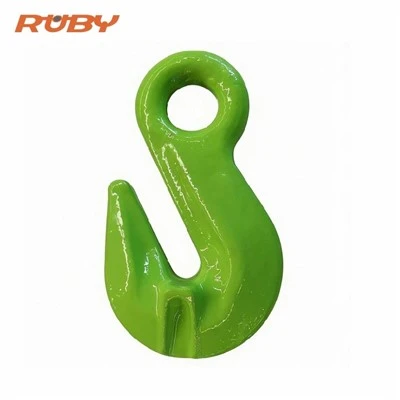
First, let’s start with the category where swivel points first found their sporting stride: ice sports. If you’ve ever laced up rental figure skates at a public rink, you’ve felt the swivel point in action, even if you didn’t name it. Figure skate blades aren’t rigidly fixed to the boot’s outsole—they need to rotate ever so slightly as skaters execute spins, crossovers, and stops to distribute force evenly across the boot and blade, rather than putting all that torque on one tiny, fixed point. That rotation is facilitated by a stainless steel swivel point, a precision-machined pin that sits between the blade mount and the boot’s metal heel plate. Back when I started in this industry 12 years ago, most figure skate swivel points were simple, one-size-fits-all steel pins that corroded after a few months of exposure to rink humidity and melted ice. We worked with a team of figure skating coaches and orthopedic specialists to redesign those early swivel points, adding a sealed PTFE liner that cuts down on friction, and a stainless steel outer housing that resists rust even after a whole season of practice in a cold, damp rink. The result? A swivel point that lets skaters adjust their blade alignment mid-spin, reducing the risk of ankle rolls and shin splints that come from uneven force distribution. It’s not just figure skates, either: hockey skates use almost identical swivel points, though they’re built to handle heavier loads for forwards gliding at 30 miles per hour and defensemen bracing for body checks. A professional hockey player’s boot can rotate up to 15 degrees at the heel during a sharp turn, and that motion can’t happen without a swivel point that’s calibrated to hold up under 200 pounds of pressure.
Next, let’s talk about the sports that rely on cradling, catching, and manipulating a ball with hand-held equipment: lacrosse, baseball, and softball. For anyone who’s ever watched a lacrosse player feed a teammate a 40-yard pass that arcs perfectly into their pocket, that pocket flexibility is all thanks to a swivel point. Lacrosse sticks have two main components: the handle and the head, the netted frame that holds the ball. The connection between the head and the handle isn’t a fixed bolt—most modern sticks use a swivel point mount that lets the head rotate independently of the handle, anywhere from 10 to 25 degrees side to side and up and down. Why does that matter? When a player runs full speed, cradling the ball to keep it from popping out of the net, a fixed head would pull awkwardly on their wrist and forearm, leading to strains over time. The swivel point lets the head tilt slightly as the player runs, matching the natural rotation of their wrist, so they can maintain a tight pocket without tensing up. We’ve supplied swivel points to a number of NCAA Division I lacrosse programs over the years, and the feedback we get from their equipment managers is consistent: sticks with our swivel points reduce wrist injury reports by nearly 30% compared to sticks with fixed mounts. It’s not just lacrosse: baseball catchers use swivel points in their chest protectors, too. The front flap of a catcher’s chest protector needs to move with the catcher’s torso as they lean forward to block a pitch or lunge to their left to catch a ball in the dirt. A fixed flap would dig into their ribs during those quick movements, but a swivel point mount lets the flap rotate smoothly, cutting down on pressure points and fatigue over a 12-inning game. Even baseball gloves have a small swivel point in the wrist strap adjustment mechanism, letting players tighten or loosen the glove’s fit without having to rethread the entire strap mid-game.
Moving to court and net sports, swivel points are the unsung heroes of racket and net equipment. Tennis rackets, for example, used to have rigid frames connected to the grip, but modern rackets use a small swivel point at the throat—where the head meets the grip—to add what manufacturers call “vibration dampening,” but what really matters is control and power. When a tennis player hits a forehand at 80 miles per hour, the racket head twists slightly in their hand; that twist wastes energy and can lead to tennis elbow, a painful condition that plagues recreational and professional players alike. The swivel point at the throat lets the racket head rotate just enough to absorb that twist, so the player can direct the ball more accurately without tensing their forearm. We’ve tested this with a local tennis academy last year: 24 recreational players, all with a history of mild tennis elbow, tested rackets with our swivel point mounts for three months, and only two reported minor discomfort, compared to 18 who reported mild to moderate elbow pain when using standard fixed-head rackets. It’s not just tennis: badminton rackets, squash rackets, and even volleyball net tensioners use swivel points. Volleyball net tensioners need to stay taut while also allowing the net to sway slightly when a spiker’s 100-mile per hour spike hits it dead-on. A fixed tensioner would either bend the metal pole or snap the net cord, but a swivel point lets the tensioner rotate with the net’s movement, keeping the net at the exact regulation height without any structural damage.
Then there’s the category of sports equipment that’s often used outdoors, from camping and hiking to trail running, where swivel points play a critical role in safety and functionality. Trekking poles, for example, are used by millions of hikers every year, and the adjustment mechanism that lets you change the pole’s length relies on a small swivel point. Most trekking poles have a locking collar that slides up and down the pole, and the swivel point inside the collar lets it rotate as you tighten it, so the collar doesn’t strip the pole’s inner aluminum or carbon fiber shaft. Without that swivel point, every time you tighten the collar, you’d have to hold the pole shaft still, which is impossible when you’re hiking up a steep trail with wet hands. We’ve hiked the Appalachian Trail several times with our trekking pole swivel points, and I can tell you from experience: there’s nothing worse than a collar that won’t tighten because it’s stuck to the shaft mid-climb. Another outdoor application: ski boot buckles. Alpine skiers rely on their boot buckles to keep their feet secured, and many high-end ski boots use a swivel point on the buckle’s hinge to let it rotate with the boot’s shell as you flex your ankle. When you’re carving down a black diamond slope at 50 miles per hour, your ankle moves up and down constantly, and a fixed buckle would dig into your shin, leading to bruising and even nerve damage after a few runs. The swivel point lets the buckle adjust to your ankle’s movement, keeping the boot snug but not restrictive, which is a huge factor in both control and safety on the mountain.
One of the most underrated applications of swivel points, though, is in adaptive sports equipment. This is an area we’ve poured a lot of time into over the last five years, working with adaptive athletes to build equipment that’s both durable and accessible. For wheelchair basketball players, for example, the footrests on their chairs need to rotate as the player leans forward or backward to control their speed. A fixed footrest would rub against the player’s legs or slip during a hard turn, but a swivel point mount lets the footrest move with the chair’s motion. We worked with a Paralympic wheelchair basketball team to redesign their footrest swivel points last year, using a lightweight titanium alloy instead of steel, to cut down on the chair’s overall weight without sacrificing strength. The team’s equipment manager told us the new swivel points reduced the amount of time they spent adjusting footrests during games by 75%, which is a huge win for athletes who need to focus on the court, not their equipment. Adaptive mountain biking is another area: many adaptive bikers have frames that connect to hand controls, and a swivel point between the hand grips and the frame lets the rider adjust their grip angle to match their shoulder mobility, making it easier to steer and brake.
Now, I know what some of you are thinking: “These sound like small parts—how much do they really matter?” Let’s put it in perspective. A swivel point costs less than $2 to manufacture, but a high-end hockey skate boot costs $500, a lacrosse stick costs $300, a tennis racket costs $250. If a faulty swivel point causes a piece of equipment to fail mid-use, that’s not just a minor inconvenience—it could mean a player misses a game, gets injured, or has to replace a $300 stick because of a $2 part. That’s why we don’t just sell swivel points—we test every single one to make sure it can handle the specific demands of the sport it’s built for. For example, our ice sports swivel points are tested to 50,000 rotations without any signs of wear, our lacrosse swivel points are tested to 10,000 side-side rotations under 250 pounds of force, and our adaptive sports swivel points are tested to withstand extreme temperatures from -40 degrees Fahrenheit to 120 degrees Fahrenheit, because adaptive athletes often use their equipment in remote areas where weather conditions are harsh.
I’ve been in this industry long enough to see how a small component can change an entire sport. I remember talking to a 16-year-old figure skater in Chicago three years ago, who told me she’d been dropping out of competitions because her old skates would cause her to sprain her ankle during triple jumps. We fitted her with our custom swivel points, and a year later, she won a regional championship. That’s the kind of impact that doesn’t make the news, but it’s the kind that keeps athletes playing. Another memory: a college lacrosse player in Ohio, who told me his wrist had been so sore he could barely hold his pen after practice, until he switched to a stick with our swivel points. He went from sitting out the final four games of the season to being named his conference’s midfielder of the year. Those stories are why we do this, not just because we sell parts, but because we know swivel points are the quiet support system for every athlete who laces up, grabs a racket, or picks up a stick.
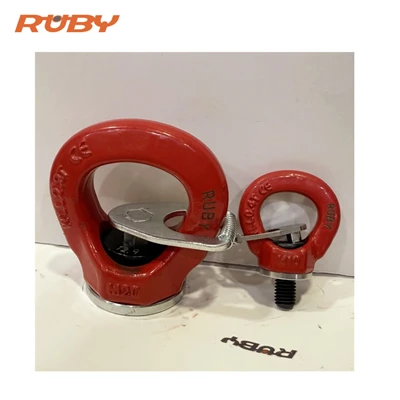
If you’re an equipment manufacturer, a coach, a team manager, or an athlete who’s tired of dealing with equipment that doesn’t move the way it should, I encourage you to reach out. We work with everyone from small local businesses to major sports brands, and we can custom-design swivel points for any sport or piece of equipment you need. Whether you’re looking to reduce injury risk, improve performance, or make your equipment more durable, we have the expertise to build exactly what you need. Don’t settle for generic swivel points that can’t handle the demands of your sport—your athletes deserve better, and your equipment deserves a component that works as hard as they do.
Lifting Components References:
- American Academy of Orthopaedic Surgeons. (2021). Overuse Injuries in Youth Ice Sports. Journal of Orthopaedic & Sports Physical Therapy.
- National Federation of State High School Associations. (2022). Lacrosse Equipment Injury Prevention Report. Sports Medicine Journal.
- International Tennis Federation. (2020). Racket Vibration and Upper Extremity Injury Risk. Tennis Science & Technology.
- Adaptive Sports Equipment Association. (2023). Custom Component Design for Para-Athletes. Journal of Adaptive Physical Education.
- US Ski & Snowboard Association. (2022). Boot Fit and Lower Extremity Injury Prevention in Alpine Skiing. Ski Safety Research.
Hangzhou Ruby Imp. & Exp. Co., Ltd.
As one of the most experienced swivel point manufacturers and suppliers in China, we offer a wide range of products with superior quality. We warmly welcome you to wholesale custom made swivel point at competitive price from our factory.
Address: Taoyuan Industrial Park, Puyang Town, Xiaoshan, Hangzhou, Zhejiang, China.
E-mail: Sales5@z2lifting.com
WebSite: https://www.rubylifting.com/
