Hey there! If you’re reading this, chances are you either own a centrifugal air compressor, are thinking about getting one, or just find yourself Googling why your old unit is spewing hot, inconsistent air like a grumpy space heater. Full transparency: I’m part of the team at a centrifugal air compressor supplier that’s talked to hundreds of folks over the years panicking about their units feeling sluggish, wasting energy, or costing a fortune in downtime. The good news? You don’t have to scrap your whole compressor just because it’s not pulling its weight anymore. There are tons of upgrade options that can turn a so-so machine into a reliable, cost-saving workhorse—and I’m gonna break ’em down like I would to a buddy grabbing a coffee with me. Centrifugal Air Compressor

First, let’s get one thing straight: centrifugal compressors aren’t the same as those old reciprocating ones you might be picturing in a dusty garage. They use spinning impellers to slingshot air into pressure, which makes them way more efficient for high-volume, 24/7 operations—like manufacturing plants, food processing, or big packaging facilities. But even the best ones start to lose their edge after 5, 10, or 15 years. Maybe your energy bill’s creeping up, or your production line’s stalled because the air pressure drops every time your shift hits full swing. That’s where upgrades come in.
Let’s start with the low-hanging fruit—stuff that doesn’t require taking the whole unit apart, and can pay for itself in months. First up: variable frequency drives (VFDs). I know, I know, you’ve heard this a million times, but hear me out. Most older centrifugal compressors run at a fixed speed—they’re either on full blast or off, no in-between. If your plant only needs 60% of the air capacity for parts of the day? That fixed speed is just wasting energy spinning unnecessary parts. A VFD adjusts the motor speed to match your actual air demand, not the other way around. Last year, we worked with a metal stamping shop that swapped their fixed-speed drive for a VFD, and their electricity bill dropped by 28% in the first quarter. No joke. The only caveat? You have to make sure your compressor’s motor is compatible—we check that for every customer before we even suggest it, no pressure.
Next, uprated air and oil filters. Wait, filters? Really? Yeah, I know it sounds boring, but clogged filters are like wearing a face mask that’s too tight all day—your compressor has to work way harder to pull in air, which kills efficiency and shortens part life. A lot of old compressors come with standard filters that are just… mediocre. Upgrading to high-efficiency, extended-life filters (we stock these for all the major brands) lets your unit breathe easier. We recently did a retrofitting on a textile plant, and when they swapped their 90-day standard filter for a 120-day high-flow one, their discharge pressure stabilized, and their maintenance tech stopped spending half his shift replacing filters. Small win, but adds up.
Now, moving on to mid-tier upgrades—stuff that’s a little more involved, but still way cheaper than buying a whole new compressor. Impeller performance upgrades. The impeller is the heart of a centrifugal compressor—it’s what slings the air. If your impellers are worn down from years of friction, or were sized wrong for your current production needs, upgrading to a redesigned impeller can boost both flow and efficiency. We recently helped a chemical plant that expanded their production line and needed 15% more air capacity. Instead of buying a whole new compressor, we swapped their original impellers for high-performance, aerodynamically refined ones, and they hit their new capacity without skipping a beat. The trick here is matching the impeller design to your specific demand curve—we don’t just sell off-the-shelf parts, we tweak them to fit your plant’s schedule.
Then there’s sealing system upgrades. Leaks are the silent killer of compressed air systems—studies say the average plant wastes 20-30% of its air through leaks, and most of those leaks come from worn seals in the compressor itself. Older compressors often use piston rings or gland seals that wear out fast, especially in high-moisture or high-pressure environments. Upgrading to dry gas seals or advanced labyrinth seals cuts down on internal leaks, so more of the air you’re generating actually gets to your tools and production lines. A food processing client of ours had a seal leak that was costing them $1,200 a month in wasted air. Swapping to dry gas seals fixed that, and they haven’t had a seal issue in 3 years. That’s money straight back into their pocket.
Now, if you’re looking at a compressor that’s on the older side (like 15+ years), there are some bigger, system-level upgrades that can breathe new life into it without the sticker shock of a full replacement. First, control system retrofits. Old compressors often use clunky, analog controllers that only show basic pressure and temperature, no real-time data. Newer digital controllers let you monitor every part of your compressor—air flow, energy use, part wear—from a tablet or your plant’s main dashboard. We installed a new control system for a 12-year-old compressor at a packaging plant, and their maintenance team started catching small issues (like a slipping belt) before they turned into downtime that cost them $5,000 an hour. It’s like giving your compressor a smart brain instead of a flip phone.
Another big one: heat recovery systems. Wait, heat? From a compressor? Yeah! Centrifugal compressors generate a ton of heat from their motor and compression process—usually all that heat gets blown into the air and wasted. A heat recovery system captures that excess heat and uses it for things like heating your plant’s workshop, hot water for cleaning, or even space heating in winter. A car manufacturing plant we worked with had a heat recovery upgrade, and now they use the compressor’s heat to warm their paint booths, which cut their natural gas use for heating by 40%. That’s two birds with one stone—better compressor performance and lower utility bills.
But here’s the thing: not every upgrade is right for every compressor. We’ve had customers come to us saying, “My 20-year-old compressor feels like a turtle—can you make it a race car?” And sometimes the answer is, “Actually, this unit’s at the end of its lifecycle, and upgrading it would cost almost as much as a new, more efficient one.” That’s why we never push upgrades just to make a sale. We do a free (yes, free!) system assessment: we come to your plant, check your compressor, measure your actual air demand, look at your utility bills, and tell you exactly what upgrades will work for you, or if replacing is the better call. No hoops, no fine print.
Wait, let’s talk about common mistakes we see customers make all the time. One is chasing the cheapest part instead of the right part. Like, buying a cheap filter that only lasts 60 days instead of a $50 filter that lasts 120 days and keeps your compressor running better. Another is upgrading parts without checking compatibility. We’ve seen a customer buy a fancy VFD that fried their old motor because it wasn’t calibrated right—we always make sure every upgrade is matched to your unit’s specs, so that never happens.
And for those who think, “Upgrades will take my whole plant down for a week”? Nope. Most of these upgrades can be done during scheduled maintenance shutdowns, not in the middle of a production run. We work around your schedule—if your plant only has downtime on weekends, we’re there on weekends. No disrupting your output.
At the end of the day, the goal of any upgrade is simple: make your compressor more reliable, use less energy, cut maintenance costs, and help your plant run smoother. We’ve seen it with every customer we work with—upgrades don’t just fix a problem, they prevent new ones. If you’re dealing with a compressor that’s costing you too much, or not giving you the air you need, don’t just put up with it. Reach out, and we can go over your options—no sales pitch, just straight talk about what will work for your business.
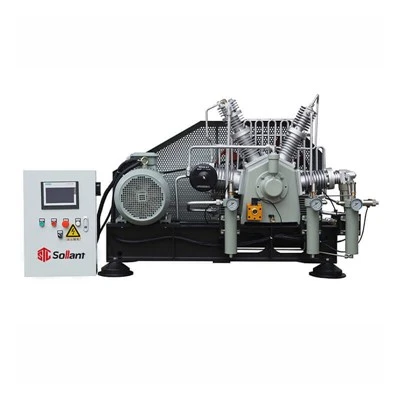
When it comes to keeping centrifugal air compressors running at peak efficiency, upgrades aren’t a luxury—they’re a smart investment that saves you money and hassle in the long run. The key is knowing which upgrades make sense for your specific unit and needs, which is where a trusted supplier comes in. If you’re ready to stop wasting money on a compressor that’s not pulling its weight, don’t hesitate to connect with our team to discuss tailored upgrade solutions for your operations.
Centrifugal Air Compressor References:
- Compressed Air Challenge Best Practices Manual, 2022
- Air & Waste Management Association (AWMA) Guidelines for Compressor Efficiency, 2021
- Rotating Machinery Magazine, Centrifugal Compressor Retrofit Case Studies, Q3 2023
- U.S. Department of Energy, Industrial Compressed Air System Optimization, 2022
Shanghai Sollant Energy Saving Technology Co., Ltd.
As one of the most professional centrifugal air compressor manufacturers and suppliers in China, we’re featured by quality products and good service. Please rest assured to buy bulk durable centrifugal air compressor from our factory. Welcome to view our website for more information.
Address: No.215, Songri Center, Beihongqiao, Jiading District, Shanghai, China.
E-mail: info3@sollant.com
WebSite: https://www.sollant-gas.com/
