If you’ve ever spent hours hunched over a crafting table, covered in glue, glitter, paint, and fabric scraps, you know your craft room countertop isn’t just a surface—it’s the backbone of every project, from small paper crafts to large woodworking builds. When I get emails from fellow crafters asking if quartz surface works for a craft space countertop, my answer is a resounding yes, and not just because I supply it. I’ve worked with quartz for over a decade, walking home hobbyists, small craft business owners, and even DIY enthusiasts through why it’s such a smart choice for a space that sees more mess and wear than most other rooms in a home. Quartz Surface

First, let’s cut through the noise: craft rooms have unique needs, and not all countertops are built to handle them. A kitchen countertop might need to stand up to heat from pots and spills of tomato sauce, but a craft room has entirely different daily abuses. You’ve got hot glue guns that can hit 380°F, resin that’s sticky as molasses, permanent marker that seeps into porous wood, and heavy objects like cutting boards, paint cans, and die-cutting machines that can scratch or dent softer surfaces. That’s where quartz stands out, starting with its non-porous core.
Quartz is engineered to be 93% natural quartz crystal and 7% binders, pigments, and resins—unlike granite, which is porous, even if it’s sealed. Porosity is a big deal in a craft room because it means spills seep in instead of sitting on the surface. Last year, a customer who runs a custom candle shop told me she used a butcher block countertop for her pouring station. One day, she spilled a whole pitcher of soy wax that cooled and seeped into the wood, leaving a permanent discoloration she could never sand out. Another crafter I know used laminate for a stamping area; acrylic ink soaked into its tiny pores, turning her once-white countertop a murky purple and making it impossible to use for light-colored projects ever again. Quartz doesn’t have that problem. Its non-porous construction means spills sit on top, so you can wipe them up with a paper towel and a little rubbing alcohol before they set. Even resin, which is notoriously hard to clean once cured, can be lifted off a quartz surface with a plastic scraper and mineral spirits—no sanding required.
Heat resistance is another make-or-break for craft rooms. I’ve heard too many horror stories of crafters leaving a hot glue gun, a curling iron, or a hot pot for polymer clay right on their countertop, only to pull away a charred, bubbled spot that can’t be repaired. Most laminate countertops can only handle heat up to 200°F, and solid wood starts to warp at around 212°F. Granite, while durable, can crack if you drop a hot pan on it wrong. Quartz, though, has a heat resistance rating of up to 400°F. That means a hot glue gun left on for an hour won’t leave a mark, a small batch of melted candle wax poured straight from a 350°F pot won’t damage the surface, and even a heated embossing tool won’t burn it. The only caveat? If you’re working with very high heat—like a soldering iron that hits 800°F or a kiln shelf hot from a firing—you should use a heat mat. But for the bulk of craft projects, quartz holds up without any extra protection.
Let’s talk about scratches and impact, too. Craft rooms are full of sharp tools: craft knives, rotary cutters, wire cutters, and even the blades of large die-cutting machines. I’ve seen someone drag a rotary cutter across a laminate counter and leave a deep, permanent scratch that ruined their space for quilting projects, since the fabric would catch on the groove. Quartz’s Mohs hardness rating is 7, which is harder than steel (which is around 5.5) and way harder than laminate (around 2) or wood (around 3). That means a craft knife dragged lightly across it won’t leave a mark. Even if you drop a heavy metal paint can or a glass vase for flower arrangements, quartz won’t chip or scratch easily. We do recommend using a soft mat for tasks that involve a lot of pressure, like cutting leather for purses, but for most daily crafting, you don’t have to worry about small accidents.
Then there’s the low-maintenance factor, which is huge if you’re spending more time creating than cleaning. In a kitchen, you might clean your countertop once a day, but in a craft room, you’re wiping glitter off it every night, scrubbing paint splatters weekly, and maybe even hosing it down occasionally if you’re working with messy mediums like plaster or clay. Quartz is stain-resistant, but that doesn’t mean it’s stain-proof—strong chemicals like bleach or acetone can discolor it if left on for too long, but for the most part, a little soap and water will get it looking good as new. I have a small craft room of my own, and I’ve had my quartz countertop for three years. I spilled resin, acrylic paint, glitter glue, and even wine during a late-night crafting marathon, and none of it left a permanent mark. A quick wipe with a damp cloth is all it takes, which saves me so much time I can spend more time on projects instead of scrubbing.
Of course, no material is perfect, and quartz has a few drawbacks to consider for a craft room. First, it’s not completely heat-proof for extreme temperatures. As I mentioned earlier, a soldering iron or a kiln shelf will burn it, so you’ll need a heat mat if you do metalwork or pottery. Second, it’s not self-healing, unlike some solid surface materials that can fill in small scratches with a heat gun. If you do get a deep scratch from a really sharp tool, a professional can buff it out, but it’s not something you can fix at home easily. Third, quartz is more expensive than laminate or even butcher block, but if you’re a serious crafter or run a small craft business, the durability will save you money in the long run. I’ve had customers who replaced their laminate countertops every two years because of scratches and stains, and after switching to quartz, they haven’t had to do anything more than basic cleaning in five years.
Wait, also, there’s the aesthetic side that many crafters overlook. Craft rooms are supposed to be inspiring spaces, right? Quartz comes in hundreds of colors and patterns—from classic white and cream to bold blues, greens, and even sparkly patterns that mimic granite or marble. You can pick a color that matches your craft supplies, makes small projects stand out, or just brightens up a room that might have been dark before. I work with a customer who does cross-stitch and embroidery, and she picked a soft gray quartz countertop that makes her colorful floss and finished pieces pop. Another customer who does mixed media art went with a deep blue quartz, and it’s become a centerpiece of her creative space. Unlike laminate, which often has generic patterns, quartz can give your craft room a custom look without the high cost of natural stone.
Let me also address a common myth I hear all the time: “Quartz is too cold for a craft room.” I get it—if you’re working with clay, you might worry the surface will make the clay dry out too fast, or if you’re gluing small pieces, a cold surface could make the glue set unevenly. But in real life, a countertop will warm up from your hands and the lights in the room within minutes of you starting a project. I’ve worked with pottery crafters for years, and none of them have complained about quartz being too cold. If you’re really worried, you can always add a small wooden cutting board for clay or glue projects, which gives you a warmer surface for those specific tasks while still having the durability of quartz for the rest of the counter.
Another thing to consider is that quartz is non-porous, so it resists mold and mildew. If you have a craft room that’s prone to humidity—like if you store fabric or paint in a basement space—this is a big plus. Porous materials like wood or laminate can absorb moisture, leading to mold growth over time, especially if you spill water or paint and don’t clean it up right away. Quartz doesn’t have that problem, so you won’t have to deal with hidden mold under your countertop that can damage your supplies or even be a health hazard.
I’ve seen so many crafters make the mistake of choosing a countertop based solely on cost, only to regret it a year later when they have to replace it. A friend of mine who sells handmade soaps used a particleboard countertop for her mixing station. It was cheap at first, but after a few months of spilling lye solution and heavy bottles of essential oils, it warped and disintegrated, ruining half her stock. She ended up switching to quartz and says it’s the best investment she’s ever made for her business. That’s the thing about a craft room countertop—it’s not just a place to work; it’s a workspace that should last as long as your passion for creating.
If you’re considering quartz for your craft room, here are a few tips to make it work for you. First, measure your space carefully and order a slab that’s thick enough—at least 3cm is ideal for heavy use, like if you have a large die-cutting machine or a table saw. Second, choose a low-sheen finish if you’re working with small details like stamping or beadwork; a high-gloss finish can glare under overhead lights and make it hard to see small details. Third, don’t forget about the edges—rounded edges are better for craft rooms because they’re less likely to catch fabric, ribbon, or other small supplies. Finally, if you’re working with expensive resin or other delicate mediums, a custom mat made for quartz will add an extra layer of protection against spills and scratches.
At the end of the day, the best craft room countertop is one that can keep up with your creativity. It needs to handle mess, wear, and all the little accidents that come with making things. Quartz checks all those boxes: non-porous, heat-resistant, scratch-proof, low-maintenance, and stylish. It’s not a perfect fit for every project, but for the vast majority of crafters—whether you’re a home hobbyist or a small business owner—it’s a far better choice than laminate, wood, or even natural stone.
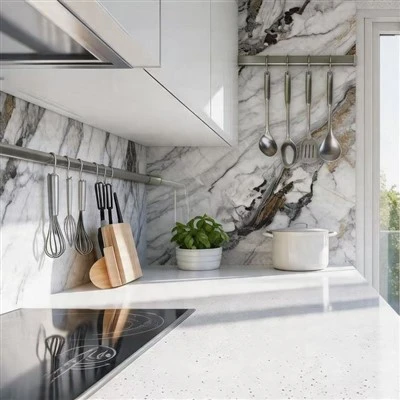
If you’re ready to learn more about how quartz can work for your craft room, or want to see samples of colors and finishes that would work for your space, reach out to our team today to discuss your needs. We can help you find the right quartz surface for your countertop, whether you’re setting up a small home craft space or a larger workshop. Don’t settle for a countertop that will hold back your creativity—invest in something that can keep up with all your projects.
Commercial Quartz Countertop References
- Stone Institute. "Quartz Countertop Performance: Durability and Maintenance Guidelines." 2022.
- Craft and Hobby Association. "Workspace Durability: Choosing Surfaces for Creative Spaces." 2021.
- International Organization for Standardization. "Natural and Engineered Stone Test Methods: Heat and Scratch Resistance." ISO 15462:2020.
- North American Stone Institute. "Porosity Testing for Engineered Stone Materials." 2023.
- Craft Business Monthly. "Workspace Investments: Long-Term Cost Comparison of Countertop Materials for Small Craft Businesses." 2022.
Wuhu Junde New Material Technology Co., Ltd.
As one of the most experienced quartz surface manufacturers and suppliers in China since 1998, we warmly welcome you to wholesale top-quality quartz surface made in China here from our factory. If you have any enquiry about cooperation, please feel free to email us.
Address: No.8 Yulin Road, Xinwu Economic Development Zone, Anhui Province, China
E-mail: 1127319898@qq.com
WebSite: https://www.jundequartz.com/
