If you’ve ever worked on a marine build, repaired a rusted metal gutter by the coast, or rigged a temporary seal on a boat that’s been sitting in a salt marsh, you’ve probably asked the same question: will aluminum foil tape hold up here? As a supplier who’s spent years answering this exact call—from both weekend DIYers with a leaky pontoon and industrial maintenance teams managing coastal infrastructure—I’ve seen firsthand how salt water doesn’t just test tapes, it uncovers every gap in material science that cheap manufacturers skip over. Today, I want to break down how aluminum foil tape actually performs in salt water, what makes some tapes work and others fail, and the hard lessons I’ve learned standing behind the product I sell to people who depend on it. Aluminum Foil Tape
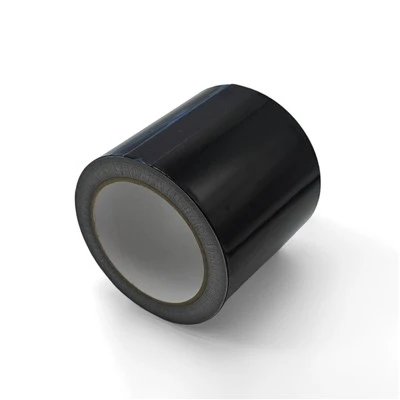
Let’s start with the basics, because too many suppliers skip the foundation to push a generic “all-purpose” tape that’s just not built for salt. Aluminum foil’s core strength is its passive oxide layer: when pure aluminum is exposed to oxygen, it forms a thin, invisible Al₂O₃ layer that’s about 5 nanometers thick. That layer doesn’t flake, doesn’t leave a powdery residue like rust, and slows further corrosion—at least, when it’s not disrupted. Salt water, though, is a corrosive cocktail of sodium, chloride, and other ions that act like tiny wrecking balls. Chloride ions are small enough to penetrate that fragile oxide layer, and once they reach the pure aluminum underneath, they trigger a galvanic reaction. That reaction eats away at the foil’s surface, pitting it, and if the tape’s adhesive lets water seep behind the foil, the damage gets even worse.
Wait, but not all aluminum foil tapes are the same. I see this all the time: a customer buys a cheap tape from a big-box store, slaps it on a metal bulkhead near the beach, and calls me a week later saying it fell off or turned black. The problem isn’t aluminum itself—it’s how manufacturers construct the tape. Let’s talk about the two key components that make or break saltwater performance: the foil grade and the adhesive.
First, foil grade. 8000-series aluminum (specifically 8011) is the go-to for marine-grade foil tape, because it has small amounts of iron and silicon added to boost corrosion resistance, compared to the soft 1100-series aluminum used for household wrapping. Cheap tapes often use 1100-series foil—thinner, softer, and way more prone to pitting when exposed to salt. I’ve tested this in my own workshop; I submerged two pieces of tape, one with 8011 foil and one with 1100-series, in a 3.5% salt solution (that’s the same salinity as the open ocean) for 30 days. The 1100-series tape had visible pits all over the foil by day 10, and by day 30, the edge where it adhered to metal was completely separated. The 8011-grade tape? Only faint, microscopic spotting, and the adhesive bond held strong. That’s not magic—that’s paying for the right raw material, which many cut-rate suppliers refuse to do.
Then there’s the adhesive, which is even more important for saltwater performance than the foil itself. The adhesive is the barrier between the foil and whatever surface you’re sticking it to, and it’s the first line of defense against salt water seeping behind the tape. Acrylic adhesives are the gold standard here, specifically pressure-sensitive acrylic (PSA) formulated for high humidity and salt exposure. Rubber-based adhesives, which are common in cheap tapes, break down when exposed to salt and UV light—they get brittle, turn sticky and then crumbly, and lose their bond. I’ve seen a customer use a rubber-based tape to seal a metal vent on his coastal home; within six months, the adhesive had disintegrated, and the vent was leaking rain and salt water into his attic. Acrylic adhesive, on the other hand, has good chemical resistance, stays flexible in a wide temperature range, and doesn’t break down when exposed to salt. It also has better adhesion to metals, which is critical for marine or coastal applications where surfaces are often wet or slightly corroded.
Now, let’s get into real-world performance, not just lab tests, because that’s what actually matters to my customers. I supply aluminum foil tape to three main groups: marine repair teams, industrial maintenance, and people doing coastal home renovations. For marine use—sealing hatches, patching hulls, wrapping metal exhaust pipes that sit near salt spray—8011 foil with acrylic adhesive typically lasts between 3 and 5 years, if applied correctly. I have a commercial fishing boat captain as a customer who’s been using my tape to seal his rod holders for 4 years now; he told me last month that it’s still holding, even through thousands of miles of saltwater spray and being dragged onto beaches at low tide. That’s impressive, but it’s not unlimited. If you submerge the tape fully in salt water for extended periods—like taping a metal pipe that’s under the high-tide line—performance drops. Full submersion means constant water contact, no air to replenish that oxide layer, and chloride ions can get trapped under the adhesive, accelerating corrosion. In those cases, I recommend a different product, but for most marine applications—salt spray, occasional splash, partial submersion—the tape works.
Industrial applications are even more demanding. A power plant on the Gulf Coast uses my aluminum foil tape to wrap their cooling system’s metal pipes, which are exposed to constant salt water from the nearby bay. They’ve reported that the tape holds up for 5 years, compared to 18 months for the cheap tape they used before switching. That’s a huge difference for their maintenance budget, because they don’t have to shut down operations every year to re-wrap pipes. I also supply to petrochemical refineries along the East Coast, where workers use the tape to seal ductwork that carries humid, salt-laden air; they say it resists peeling and corrosion far better than any other tape they’ve tried.
But here’s the hard truth I have to tell every customer: no aluminum foil tape is 100% corrosion-proof forever. There are factors that even the best tape can’t overcome. First is surface preparation. If you stick tape to a metal surface that’s covered in salt residue, grease, or loose rust, the adhesive can’t bond properly. I’ve seen a technician at a coastal shipyard apply tape to a rusty bulkhead, and within two weeks, the tape peeled off because he didn’t clean the surface first. The rule for saltwater applications is simple: scrape off all loose debris, wipe the surface with isopropyl alcohol to remove salt and grease, and let it dry completely before applying the tape. That small step can double or triple the tape’s lifespan.
Second is UV exposure. Aluminum foil is reflective, so it does resist UV better than many other tapes, but constant direct sun—like on a boat’s deck or a rooftop in Florida—will break down the adhesive over time. Even the best acrylic adhesive will degrade after 5 or 6 years of full sun and salt spray, so for applications that get direct sunlight 12 hours a day, I recommend checking the tape every year for peeling or pitting, and re-applying if needed.
Third is the quality of the tape itself. I’ve had customers bring me cheap tapes they bought online, and I can tell the difference immediately. The foil is thin and flimsy, the adhesive is sticky but not durable, and the edges curl within a few months. When I test those cheap tapes, the oxide layer is only a fraction as thick as my product, and the adhesive fails saltwater immersion tests in a week. I’ve had one customer who tried to save $50 on a roll of tape for his boat, and ended up paying $2,000 to re-seal his entire hull 6 months later. That’s the tradeoff: cheap tape costs less upfront, but it costs more in the long run.
I also get a lot of questions about galvanic corrosion, which is another big concern for saltwater applications. Galvanic corrosion happens when two different metals are in contact with each other and salt water acts as an electrolyte. Aluminum is more active than most common metals like steel or copper, so when aluminum foil tape is stuck to steel, it can act as an anode, corroding faster than the steel. Wait, that’s a fair point—so how do we prevent that? The key is making sure the tape is properly bonded and the edges are sealed. If the tape is fully adhered to the metal, and there’s no gap where salt water can seep between the foil and the steel, galvanic corrosion is minimal. For applications where the two metals are in direct contact with salt water for long periods, I recommend adding a primer between the metal and the tape to create a barrier. That’s another small step that makes a big difference.
Over the years, I’ve seen aluminum foil tape work miracles in saltwater environments, but I’ve also seen it fail spectacularly. The difference isn’t the aluminum itself—it’s the product’s construction, how it’s applied, and how it’s used. As a supplier, my job isn’t just to sell tape; it’s to help customers pick the right product for their job, explain its limits, and stand behind it when something goes wrong. That’s why I only offer tapes formulated specifically for marine and coastal use, because I’ve tested them myself in real saltwater conditions, not just in a lab.
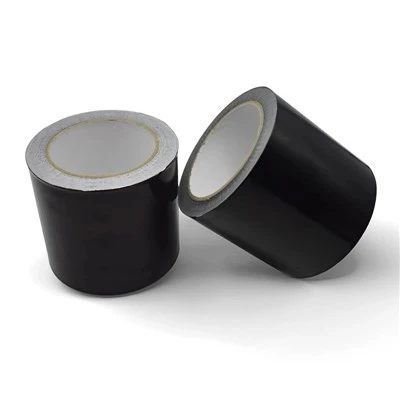
If you’re working on a project that involves salt water—whether it’s a small boat repair, a coastal home renovation, or an industrial maintenance job—don’t settle for a generic all-purpose tape. Ask for aluminum foil tape designed for saltwater environments. If you’re not sure which product is right for your specific application, feel free to reach out to discuss your needs and get guidance on the best solution.
Aluminum Foil Insulation Tape References
- ASM International. (2000). Corrosion: Fundamentals, Testing, and Protection. Volume 13A of the ASM Handbook.
- National Association of Corrosion Engineers (NACE). (2018). Corrosion Control in Marine Environments: Best Practices and Materials Selection.
- ASTM International. (2021). Standard Test Method for Effect of Salt Water on Adhesion of Pressure-Sensitive Tapes. ASTM D3359-21.
- Aluminum Association. (2019). Aluminum in Marine Applications: Corrosion Resistance and Material Selection Guidelines.
Deqing Hongxin New Material Technology Co., Ltd.
As one of the most professional aluminum foil tape manufacturers and suppliers in China, we also support customized service. Please feel free to wholesale high quality aluminum foil tape in stock here from our factory. Welcome to contact us for quotation.
Address: No. 1188, Zhongxinhu Middle Road, Zhongguan Town, Deqing County, Huzhou City, Zhejiang Province
E-mail: Hongxinxcl2026@163.com
WebSite: https://www.hxnewmat.com/
