As a supplier of Citric Acid Monohydrate, I’ve witnessed firsthand the profound impact this versatile ingredient has on the texture of food. In this blog, I’ll delve into the scientific details of how Citric Acid Monohydrate can transform the sensory experience of various food products. Citric Acid Monohydrate
Understanding Citric Acid Monohydrate
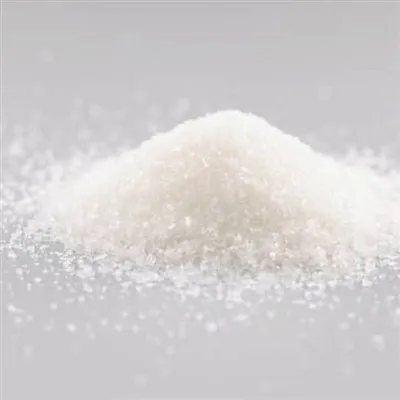
Citric Acid Monohydrate is a crystalline form of citric acid, a naturally occurring organic acid found in citrus fruits such as lemons, limes, and oranges. It is widely used in the food industry as a flavor enhancer, acidulant, and preservative. Chemically, its formula is C₆H₈O₇·H₂O, and it has a characteristic sour taste.
Effects on Gelation and Thickening
One of the most significant effects of Citric Acid Monohydrate on food texture is its role in gelation and thickening. In many food systems, proteins and polysaccharides are the key components responsible for forming gels. Citric Acid Monohydrate can affect the gelation process by altering the pH of the food matrix.
For example, in dairy products like yogurt and cheese, the addition of Citric Acid Monohydrate can lower the pH, which in turn affects the solubility and aggregation of milk proteins. At a lower pH, casein proteins in milk start to aggregate and form a three – dimensional network, leading to the thickening and gelation of the milk. This is because the change in pH reduces the electrostatic repulsion between the protein molecules, allowing them to come closer together and form cross – links.
The same principle applies to the gelation of pectin, a polysaccharide commonly used in jams and jellies. Citric Acid Monohydrate helps to decrease the pH of the pectin solution to the optimal range for gel formation. When the pH is adjusted correctly, pectin molecules can interact with each other more effectively, forming a gel structure that holds the fruit juice and gives the jam its characteristic spreadable texture.
Emulsion Stability
Emulsions are mixtures of two immiscible liquids, such as oil and water, where one liquid is dispersed in the other in the form of small droplets. Citric Acid Monohydrate can play a crucial role in stabilizing emulsions.
In food emulsions, such as mayonnaise or salad dressings, the stability of the emulsion is often maintained by emulsifiers and by controlling the surface charge of the droplets. Citric Acid Monohydrate can adjust the pH of the emulsion, which affects the ionization state of the emulsifiers and the surface charge of the oil droplets.
By lowering the pH, Citric Acid Monohydrate can increase the surface charge density of the oil droplets, leading to greater electrostatic repulsion between them. This repulsion prevents the droplets from coalescing, thus maintaining the stability of the emulsion. Additionally, the acidic environment created by Citric Acid Monohydrate can also affect the conformation of protein – based emulsifiers, enhancing their ability to stabilize the oil – water interface.
Crumb Structure in Bakery Products
In bakery products, the texture of the crumb is of utmost importance. Citric Acid Monohydrate can have a positive impact on the crumb structure of bread and cakes.
During the baking process, yeast fermentation produces carbon dioxide gas, which causes the dough to rise. However, the pH of the dough can influence the rate of fermentation and the quality of the resulting crumb. Citric Acid Monohydrate can be used to adjust the dough’s pH to an optimal level for yeast activity.
A slightly acidic environment created by Citric Acid Monohydrate can soften the gluten network in the dough. Gluten is a protein complex that gives bread its structure and elasticity. By weakening the gluten network to a certain extent, the dough becomes more extensible, allowing the carbon dioxide bubbles to expand more easily. This results in a lighter and more airy crumb structure in the final baked product.
Shelf – Life and Texture Preservation
Another important effect of Citric Acid Monohydrate on food texture is its contribution to shelf – life and texture preservation. Microorganisms can cause spoilage in food, which often leads to changes in texture, such as softening, slime formation, or hardening.
Citric Acid Monohydrate acts as a preservative by creating an acidic environment that inhibits the growth of many spoilage microorganisms, including bacteria, yeasts, and molds. By preventing microbial growth, it helps to maintain the original texture of the food product over time.
For example, in canned fruits and vegetables, the addition of Citric Acid Monohydrate can help to preserve their firmness. The acidic environment reduces the activity of enzymes that can cause the breakdown of pectin and other cell wall components, which would otherwise lead to the softening and mushiness of the produce.
Impact on Frozen Foods
In the frozen food industry, Citric Acid Monohydrate also plays a role in maintaining texture. When food is frozen, ice crystals can form, which may damage the cell structure and lead to a loss of texture upon thawing.
Citric Acid Monohydrate can act as a cryoprotectant to some extent. By adjusting the pH and the ionic strength of the food matrix, it can affect the formation and growth of ice crystals. A properly formulated pH can help to reduce the size of ice crystals, minimizing the damage to the food tissue. This results in a better – maintained texture when the frozen food is thawed.
Conclusion
In conclusion, Citric Acid Monohydrate has a wide range of effects on the texture of food. From gelation and thickening to emulsion stability, crumb structure improvement, shelf – life preservation, and performance in frozen foods, it is a valuable ingredient for the food industry.
As a supplier, I’ve seen how food manufacturers use Citric Acid Monohydrate to create products with superior texture and quality. Whether you’re in the dairy, bakery, confectionery, or processed food business, Citric Acid Monohydrate can offer numerous benefits for your food formulations.
Potassium Sorbate If you’re interested in learning more about how Citric Acid Monohydrate can enhance the texture of your food products or if you’re looking to source high – quality Citric Acid Monohydrate for your business, I invite you to reach out. I’m more than happy to discuss your specific needs and work with you to find the best solutions.
References
- Belitz, H. – D., Grosch, W., & Schieberle, P. (2009). Food Chemistry. Springer.
- Clark, A. H., & Ross – Murphy, S. B. (1987). The relevance of polymer science to food colloids. Advances in Colloid and Interface Science, 28(1 – 3), 219 – 260.
- McClements, D. J. (2005). Food Emulsions: Principles, Practice, and Techniques. CRC Press.
Fudijia (Tianjin) Supply Chain Co., Ltd.
With abundant experience, we re one of the most professional citric acid monohydrate manufacturers and suppliers in China. We warmly welcome you to wholesale bulk high quality citric acid monohydrate made in China here from our factory. For more information, contact us now.
Address: 301-2-1C,Jin Bin Jie Zuo,No.98, Huanghai Road,TEDA, Tianjin, China
E-mail: foodchem@hjlfoods.com
WebSite: https://www.ifoodchem.com/
