If you’ve ever stood on a manufacturing floor watching a traditional industrial robot lumber through a repetitive pick-and-place task—arm extending, twisting, taking half a second to line up a part only to fumble it on bad days—you know how much time gets wasted on slow, imprecise movement. When I started working as a delta robot supplier five years ago, that’s exactly what my first customers told me they wanted to fix. They were running beverage lines where bottles had to be oriented and packed in 0.5 seconds each, electronics factories where tiny microchips had to be placed without a single damage, and food processing plants where speed meant the difference between hitting a production quota and missing it. Delta robots aren’t the flashiest robots in a trade show, but they’re the workhorses that quietly fix one of the biggest pain points in high-speed manufacturing: efficiency. Let’s break down exactly how these robots turn wasted motion into consistent, fast output that makes a real difference to your bottom line. Delta Robot
The Core Design That Makes Delta Robots So Fast
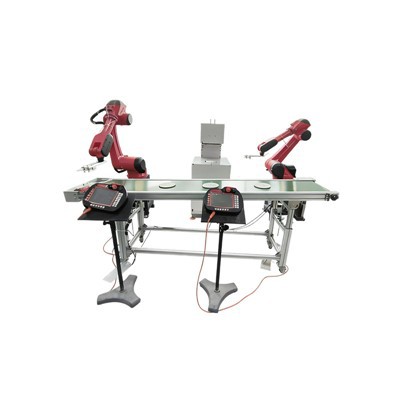
First, let’s get back to basics to understand why delta robots perform better than traditional articulated arm robots for repetitive high-speed tasks. A delta robot has three arms connected to a fixed, overhead base, and a lightweight end effector (the tool that actually grips parts) hanging below. Unlike articulated robots that move from a single joint at the base, all three of a delta’s arms move in sync to guide the end effector in a near-perfect parallel motion. That design cuts down on unnecessary weight: the heavy motors and electronics sit on the base, not on the moving arm. So when a delta robot shifts, it’s moving far less mass than a traditional robot, which means it can accelerate and decelerate faster without straining parts or wasting time.
I’ll give you a concrete example: one of my customers makes flavored iced tea bottles for a national grocery chain. Before they switched to delta robots, they used a traditional pick-and-place robot that maxed out at 45 picks per minute (PPM). The line would jam at least twice a shift because the arm’s heavy movement would cause bottles to slip or knock into each other. After installing two delta robots on the line, they hit 85 PPM on average, with zero jams for over six months straight. That’s almost double the output, no extra overtime, no new floor space. The design isn’t just about speed—it’s about the way that speed is consistent, shift after shift. Traditional robots can have slowdowns when the arm is extended fully, but delta robots’ parallel motion means their speed stays the same no matter where the end effector is moving in its working area. That’s a huge win for lines that have to move parts between multiple workstations, from a conveyor to a packaging tray, or from a tray to a storage bin.
Precision That Eliminates Wasted Material and Rework
Efficiency isn’t just about how fast a robot moves—it’s about how accurately it moves. For manufacturing, a misplaced part isn’t just a small delay; it’s wasted raw material, time spent scrapping bad products, and lost space on a production line. Delta robots are built for precision: their design lets them repeat the same movement thousands of times with an accuracy of up to 0.1 millimeters, which is critical for industries that handle tiny or fragile parts.
Take our electronics customers, for example. One small-batch circuit board maker I work with had a problem with their manual component placement line. Techs were placing surface-mount resistors (some as small as 0.4mm x 0.2mm) by hand, and roughly 1.2% of parts were placed incorrectly or damaged every hour. That added up to thousands of dollars in scrapped boards every month, plus rework that required shutting down the line for 10 minutes every hour to fix mistakes. When they installed four delta robots on their line, that error rate dropped to 0.05% within the first month. The robots don’t get tired, don’t have fumble-prone hands, and don’t need to stop to stretch or take breaks. They place parts exactly where they need to be, every single time, which means no wasted material and no lost production time from rework.
This is even more important in food and pharmaceutical manufacturing, where precision isn’t just about efficiency—it’s about compliance. The Food and Drug Administration (FDA) requires that food products are packaged with exact weights and labeling, and that pharmaceutical parts are handled without contamination. Delta robots use non-porous materials that are easy to sanitize, and their precise grip means they don’t crush delicate food items like berries or candy, or mislabel packages. Another customer of mine runs a frozen fruit packing line; before delta robots, they were rejecting 3% of fruit because of damaged packaging or squashed berries. After switching, that rejection rate dropped to less than 0.5%, and their line now runs 20% longer per shift because they don’t have to stop as often to remove bad products. That’s a hidden efficiency gain that many manufacturers miss until they switch to delta robots.
Flexibility to Adapt to Changing Production Needs
One of the biggest mistakes manufacturers make when upgrading equipment is buying a robot that only does one specific job. As product lines change, as new parts are introduced, or as production volumes shift, a robot that can’t adapt becomes a wasted investment. Delta robots are incredibly flexible, which makes them perfect for high-mix, high-speed production lines.
Let’s say you have a beverage line that makes 10 different flavors of soda, each with a different bottle size and packaging configuration. A traditional robot would take hours to retool for a new flavor—changing grippers, adjusting programming, calibrating joints. A delta robot, on the other hand, can be reprogrammed in minutes to handle a different bottle size or packaging tray. The end effector (gripper) can be swapped out in less than a minute with a quick tool change, so you can switch between flavors without shutting down the line for a full shift. I had a customer in the craft beer industry who used to run three 8-hour shifts a week just to retool their line for new seasonal flavors. After installing delta robots, they can switch between four different seasonal brews in under an hour, and their production capacity went up by 30% because they’re not wasting time on retooling.
Flexibility also means delta robots can be used for multiple tasks, not just pick-and-place. Many of my customers use delta robots for sorting, testing, or even light assembly tasks like placing caps on bottles or attaching labels. That means you don’t have to buy separate robots for each job—one delta can handle multiple steps on the line, which saves floor space and reduces total equipment costs. I recently worked with a medical device maker who used to run three separate lines for sorting, testing, and packaging syringes. They installed two delta robots that do all three tasks on a single line, cutting their total number of robots by 33%, and their production time per syringe dropped by 25%. That’s efficiency that comes from adaptability, not just speed.
Reduced Downtime and Lower Maintenance Costs
When a production line is down, every minute costs you money. Labor is wasted, parts are sitting idle, and customers are waiting for orders. Delta robots are built for long, reliable runs with minimal downtime, which is a big reason they improve overall production efficiency. Their design uses fewer moving parts than traditional articulated robots, and all the heavy components are mounted on the fixed base, so there’s less stress on the joints and arms. That means less wear and tear, fewer parts to replace, and less time spent on maintenance.
A common stat I hear from maintenance teams is that delta robots require 30-40% less downtime for routine maintenance than traditional robots. One customer of mine in the automotive parts industry used to have a traditional robot line that would go down at least twice a month for joint lubrication and part replacement. After switching to delta robots, they only need to perform maintenance once every three months, and unscheduled downtime from part failure dropped by 80%. That extra time running the line adds up: they now produce 15% more parts each month without adding extra shifts.
Another big factor is safety. Many delta robots are enclosed or have built-in safety features that mean they can run at full speed without the need for extensive safety guarding, which takes up floor space and slows down production. Traditional robots often require large safety barriers around their working area, so you have to leave space between the robot and other parts of the line. Delta robots have a smaller footprint for the same level of output, so you can fit more production in the same space. That’s a huge win for manufacturers with limited floor space, who can’t afford to expand their facility to add more lines.
Real-World Results That Speak for Themselves
I don’t sell delta robots because they’re a fancy piece of equipment—I sell them because I’ve seen them change how my customers run their businesses. Let’s go back to that frozen fruit packing customer I mentioned earlier: before delta robots, their annual output was 1.2 million cases of berries. After installing the robots, that number jumped to 1.8 million cases in the same amount of time, with the same number of employees, and less waste. The craft beer customer I talked to increased their seasonal flavor line output by 35%, which let them take on three new regional distributors without adding more staff. The circuit board maker cut their scrap costs by over $120,000 a year, and reduced their rework time by 90%.
These aren’t hypothetical numbers. These are real results from real manufacturers who were tired of seeing their lines held back by slow, imprecise, inflexible equipment. Delta robots don’t just add speed to a line—they eliminate the small, constant inefficiencies that add up to big costs over time: wasted material, rework, downtime, lost capacity, and wasted floor space. They let manufacturers do more with what they already have, instead of having to invest in new facilities or more staff.
How to Get Started
If you’re reading this, you probably have a production line that’s hitting a ceiling: you can’t keep up with demand, you’re wasting too much on scrap or downtime, or you’re spending too much time retooling for new products. Delta robots might be the solution you’ve been looking for. The good news is that you don’t have to take on a huge capital investment or shut down your entire line to test them. I work with every customer to do a free line assessment, where we walk your floor, look at your current production tasks, and show you exactly how delta robots would fit into your line, what kind of efficiency gains you can expect, and what the total cost of ownership would be. We also offer flexible integration options, so we can work around your schedule to install and program the robots without disrupting your current production.
Stamping Robot I’ve spent the last five years helping manufacturers switch to delta robots, and I can tell you this: the biggest mistake you can make is waiting to upgrade. The small inefficiencies you’re putting up with today are costing you more than the investment in a delta robot. If you’re ready to stop wasting time and material on outdated equipment, and start getting consistent, fast, efficient production that grows your business, I’d encourage you to reach out to discuss your specific needs. There’s no one-size-fits-all solution, but I can help you figure out if delta robots are the right fit for your line, and how to implement them without stress or extra costs.
References
- International Federation of Robotics. (2023). Industrial Robot Performance Metrics for High-Speed Packaging and Assembly Applications.
- American Society of Mechanical Engineers. (2022). Delta Robot Design and Efficiency for Manufacturing Operations.
- U.S. Food and Drug Administration. (2021). Automation and Precision in Food and Pharmaceutical Manufacturing.
- Manufacturing Extension Partnership. (2023). Cost Efficiency Gains from Collaborative and Delta Robot Implementations.
Dongguan Chuanglida Intelligent Equipments Co., Ltd.
As one of the most professional delta robot manufacturers and suppliers in China, we also support customized service. Please feel free to buy discount delta robot in stock here from our factory. For price consultation, contact us.
Address: Room 201, Building 2, No. 61, Shachang 1st Road, Dalang Town, Dongguan City, Guangdong Province
E-mail: haoguangli001@outlook.com
WebSite: https://www.boruntestech.com/
