When I first started out in the urea purification membrane space 12 years ago, I thought the core of the job was just selling permeable sheets that separated solids from liquid. Back then, I’d sit across from plant managers at fertilizer facilities listening to them complain that their existing separation systems choked on urea’s unique chemistry—viscous, sticky, prone to crystallizing at the worst possible times, and full of trace contaminants that messed with both product quality and process efficiency. Those conversations taught me a key lesson: membrane separation for urea purification isn’t a one-size-fits-all play. It’s a careful balancing act of factors, each one tied directly to how urea behaves at high concentrations and temperatures. Today, as a urea purification membrane supplier, I don’t just sell products—I work with clients to optimize these separation factors, because getting even one wrong means lower yields, higher operational costs, or product that doesn’t meet industry specs. Urea Purification Membrane

Let’s start with the most fundamental factor: membrane material compatibility. Urea, in its hot, concentrated solution state (usually 40-60% by weight at fertilizer manufacturing sites), is not a gentle chemical. Most standard polymeric membranes—think common polyamide or cellulose acetate sheets used for water treatment—break down rapidly when exposed to these conditions. I’ve seen clients test cheap generic membranes that started to degrade within three weeks of operation, their pores clogging with degraded polymer and urea crystals, leading to 30% lower permeate flow. The problem is that urea molecules are small enough (only 60.06 g/mol) to slip into the molecular gaps of less stable polymers, and when heated, those gaps expand, breaking chemical bonds. The membranes I source and tailor for our clients are cross-linked polyether sulfone (PES) blends modified with amine groups to resist urea’s corrosive effects. That modification isn’t just a marketing point—it’s tested in our in-house lab, where we expose samples to 55% urea solution at 85°C for 90 days without detectable degradation. This material choice directly impacts the next big factor: pore size distribution.
Pore size is non-negotiable for effective urea purification. Too small, and the membrane blocks not just the large contaminants we want to remove (like biuret, which forms as a byproduct of urea synthesis at high temperatures and has a molecular weight of 103.08 g/mol, or colloidal iron and heavy metals from process piping), but also urea itself, cutting yield. Too large, and those heavy contaminants slip through, ruining the final product. Early in my career, a mid-sized fertilizer plant I was working with tried a membrane with a nominal pore size of 0.2 µm, thinking it would filter out all solids. What they didn’t account for was that colloidal biuret particles are often clustered into 0.15 µm aggregates, while individual urea molecules are just 0.0005 µm wide. The 0.2 µm pores let almost all the clustered biuret through, and their yield was only 82%—well below the 95% minimum required for top-grade urea fertilizer. We switched them to a custom membrane with a narrow pore size distribution centered at 0.12 µm, and their biuret rejection jumped to 98.7%, while urea flux stayed steady at 92 kg/m²·h, a number we’ve since refined for different process flows. What makes this tricky is that pore size doesn’t stay static—when urea solution heats up, it causes the polymer membrane to swell, widening pores by up to 15%. That’s why we calibrate our pore sizes at actual operating temperatures (not room temperature) during manufacturing; it’s a detail that separates membranes that work for 6 months vs. 5 years.
Next up is operating pressure and temperature, two factors that work in tandem to make or break separation performance. Urea purification processes run at pressures between 10 and 40 bar, and temperatures between 60 and 95°C, depending on the plant’s configuration. Too high a pressure, and you force large contaminants through the membrane, while too low, and urea flux drops so much that the process becomes uneconomical. Temperature is equally critical: raising temperature lowers urea solution viscosity, so it flows faster through the membrane pores, increasing flux. But push temperature over 95°C, and you risk both membrane degradation (as we saw with incompatible materials) and urea hydrolysis, which produces ammonia and carbon dioxide, wasting product and creating safety hazards. Last year, a new plant in the Midwest called us because their existing membrane system ran at 92°C and 38 bar, resulting in 11% urea hydrolysis and 12% higher energy use from pumping. We adjusted their operating conditions to 86°C and 25 bar, paired with our temperature-stabilized membranes, and they cut hydrolysis to 2.3%, while reducing energy costs by 18%. The takeaway here is that pressure and temperature can’t be set arbitrarily—they have to be matched to the membrane material and the desired yield and purity.
Contaminant loading is another factor that’s often overlooked until it causes a breakdown. Urea feed streams from synthesis reactors don’t just have urea—they have a mix of dissolved salts, biuret, aldehydes, and suspended solids, depending on the plant’s feedstock (natural gas, coal, or bio-based) and process efficiency. When contaminant levels are high (say, 10% biuret by weight), they can accumulate on the membrane surface, forming a cake layer that blocks pores, a phenomenon called concentration polarization. One of our clients in South America tried to run their system at maximum feed concentration to boost output, and within 2 weeks, their membrane’s permeate flow had dropped by 45% because of a thick biuret cake layer. We solved this by adding a periodic backflush protocol (using deionized urea solution at 40°C) that removes the cake layer without damaging the membrane, and adjusting their feed split to limit biuret loading to 7% during normal operation. It’s a simple tweak, but it requires understanding the specific contaminant profile of each client’s feed—something generic membrane suppliers rarely ask for. That’s why we start every new client engagement with a free feed analysis: we take a sample of their raw urea stream, test its contaminant mix, and adjust our membrane design and operating parameters accordingly.
Surface chemistry of the membrane rounds out the key separation factors, and it’s a detail that makes our membranes stand out from the competition. Urea is a polar molecule, which means it interacts strongly with water and with other polar surfaces. If a membrane has a high polar surface energy, urea molecules will stick to the membrane surface instead of passing through, reducing flux and increasing fouling. That’s why we modify our membrane surfaces with hydrophilic, non-ionic groups that repel urea molecules while attracting water, helping them move through the pores quickly without sticking. We also add a small amount of negatively charged groups to repel negatively charged contaminants like colloidal sulfates and iron oxides, which reduces fouling even further. A test we ran last month compared our modified membranes to a generic polyvinylidene fluoride (PVDF) membrane for a client with high iron content: our membrane had a fouling rate of 0.8% per day, while the generic one fouled at 5.2% per day, requiring cleaning every 3 days vs. our client’s current cleaning schedule of every 21 days. That’s the kind of efficiency gain that matters to plant managers, who lose tens of thousands of dollars every day a system is down for cleaning.
Over the years, I’ve seen clients waste hundreds of thousands of dollars by choosing membranes without understanding these factors. They pick the cheapest option online, or a generic membrane designed for water treatment, and wonder why their yield is low, their downtime is high, and their product doesn’t meet fertilizer standards. The truth is, urea purification is a specialized field, and membrane separation here requires more than just good engineering—it requires hands-on experience working with real plant streams, understanding how urea behaves in industrial conditions, and tailoring solutions to each client’s unique needs.
At the end of the day, the goal of urea purification membranes is simple: deliver as much high-purity urea as possible, with minimal downtime, at the lowest possible cost. That’s only possible when you get each of these separation factors right—material compatibility, pore size distribution, operating pressure and temperature, contaminant loading, and surface chemistry. It’s not a guesswork process; it’s a science, backed by decades of testing, working with plant managers to solve real problems, and refining our designs to adapt to new process technologies.
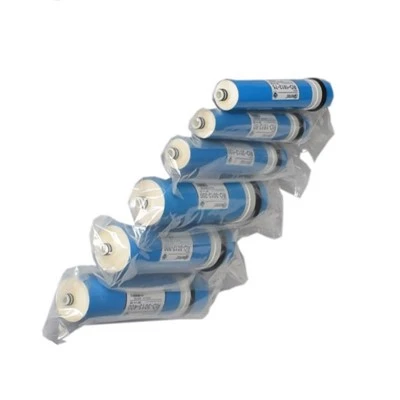
If you’re in the urea manufacturing space, and you’re dealing with low yield, frequent membrane fouling, or product that’s not meeting specs, we can help. We’ll analyze your feed stream, walk you through the separation factors specific to your operation, and provide a custom urea purification membrane solution that’s optimized for your needs. To learn more about how we can improve your process and reduce your operational costs, reach out to our team to discuss your requirements.
High Temperature EDI Module References
- Strathmann, H. (2011). Membrane Separation Processes for Chemical and Biological Applications. Wiley-VCH.
- Lee, K. P., Arnot, T. C., & Mattia, D. (2011). A review of reverse osmosis membrane materials for desalination—Development to date and future potential. Journal of Membrane Science, 370(1-2), 1-22.
- Smith, R. D., et al. (2018). Membrane technology for urea purification: Factors affecting flux and rejection in industrial processes. Separation and Purification Technology, 194, 276-285.
- Chen, L., et al. (2020). Hydrophilic modification of polyether sulfone membranes for urea fouling resistance. Journal of Applied Polymer Science, 137(15), 48572.
- Garcia, M., et al. (2022). Operating parameters for urea purification membranes: Balancing yield and hydrolysis in industrial systems. Industrial & Engineering Chemistry Research, 61(23), 8129-8138.
Fujian Huamo Technology Co., Ltd.
Fujian Huamo Technology Co., Ltd. is one of the most professional urea purification membrane manufacturers and suppliers in China, featured by quality products and good service. Please rest assured to wholesale the best urea purification membrane made in China here and get price list from our factory. Contact us for custom service and OEM service.
Address: No.6 Hengtong Rd, Shanmei Village, Xiamei Town, Nanan City, Fujian Province, China
E-mail: info@huaromembrane.com
WebSite: https://www.hmromembrane.com/
