If you’ve ever spent time browsing high-quality belt buckles, backpack fasteners, or clothing clasps, you might not realize that the tiny, durable accessory holding those items together is only as good as the mold that shaped it. As a die casting mold supplier specializing exclusively in buckle accessories, I’ve spent the last 12 years walking our production floor side-by-side with mold makers, quality control technicians, and clients who’ve come to us with failed molds: buckles that crack under pressure, lose their finish after a month of wear, or warp right out of the production line. Over that time, I’ve learned that mold quality isn’t just about the steel you use—it’s a mix of intentional design, precise machining, strict process controls, and even the day-to-day care of the tool. Today, I want to break down the key factors that make or break a buckle’s die casting mold, straight from the shop floor where we build these tools. Buckle Accessories Die Casting Mold
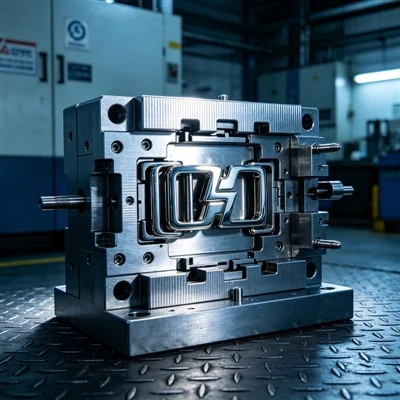
First, let’s talk about the core material: mold steel, because it’s the backbone of any die casting mold, and for buckles specifically, we have unique needs. Most general die casting molds use off-the-shelf tool steel, but buckle molds face a lot of specific stress. Buckles are almost always made from zinc alloy (we see 95% of our projects use Zamak 3, a zinc aluminum copper alloy) because it’s affordable, casts intricate details like logo engravings or embossed patterns, and holds a smooth finish. But Zamak has a high melting point, and it’s corrosive over time—especially the small amounts of aluminum and copper that interact with hot mold steel during every cycle. If you pick the wrong steel, you’ll get two big problems early: premature wear that makes your buckle’s edges fuzzy, and micro-cracking that leads to leaks of molten alloy, ruining every batch.
In our shop, we used to test cheaper cold-work tool steels like D2 for small buckle molds, but after six months, the cavities would wear down so much that the buckle’s 1mm-wide side ridges (the ones that fasten through belt holes) would be too thin to pass quality checks. Now, we rely on hot-work tool steels like H13 for most standard buckle molds, especially those that produce 10,000+ units per month. H13 has better heat resistance and impact toughness than D2, which is perfect for the repetitive opening and closing of die casting cycles that buckle molds go through. For clients making high-volume buckles—like a brand doing 50,000 belt buckles a month for national retailers—we even opt for a premium vacuum-degassed H13 variant, which has fewer internal impurities. Those small impurities are like tiny hidden cracks waiting to expand when the mold is heated and cooled thousands of times; removing them doubles the mold’s lifespan and cuts down on production downtime for repairs. I remember a client who switched from our basic H13 mold to a vacuum-degassed one last year: their downtime from mold maintenance dropped from 8 hours a week to 1 hour, and their buckle defect rate (from mold-related issues) fell from 4.2% to 0.8%. That’s the kind of material choice that makes a real difference to a small business’s bottom line.
Next, mold design precision, and not just the part you see on the drawing—we’re talking about the tiny details that add up for buckles. Buckles are small, usually 10-50mm in size, so even a 0.01mm error in the mold can translate to a buckle that doesn’t fasten right or has lopsided edges. The biggest mistake we see new clients make is designing the mold with a draft angle that’s too steep or too shallow. Draft angle is the slight taper built into the mold cavity so the finished buckle can be pushed out without sticking. For most standard buckles, we use a 0.5-degree draft angle on flat surfaces, but for the thin, functional parts of a buckle (like the prong slot or the fastener teeth), we go down to 0.3 degrees. If you make it 0.1 degrees too shallow, the buckle gets stuck in the mold, leading to damaged parts and even mold damage as workers force it out. If it’s too steep, the buckle’s edge looks fuzzy and cheap, and the functional parts (like the teeth that grip a belt) are too weak to hold up.
Another critical design feature is the gating system—this is where molten alloy enters the mold cavity, and it’s make-or-break for buckle quality. For a long time, we saw molds with a single gate located in the center of the buckle’s front face. That sounds logical, but it causes a problem: the molten metal has to push air out of the small cavity, leading to porosity (tiny air bubbles inside the buckle) that makes it crack when someone tugs on a belt. Now, we design gates for buckles based on their shape: for a typical side-release buckle, we use two small gates on the side edges, so the metal flows evenly around the cavity and pushes air out through small vent holes we build into the mold. For smaller decorative buckles with intricate engravings, we use a sub-gate system that feeds metal slowly into the cavity, preserving fine details like a brand’s logo that would get smoothed over with a larger gate. We also make sure to leave overflow channels—small extra cavities that catch the first, slightly cooler molten metal that enters the mold. Cooler metal flows slower and can create uneven surfaces, so trapping it in the overflow channels means the final buckle is smooth, consistent, and free of those streaky lines that make cheap buckles obvious.
After design, the machining process is where precision meets reality. Even the best design falls apart if the mold isn’t cut to exact measurements. In our shop, we use 5-axis CNC machining for all our buckle molds, which is non-negotiable for the tight tolerances we need. Traditional 3-axis machining can only cut along three planes, leaving slight inconsistencies in a small cavity like a buckle’s. 5-axis lets us move the cutting tool at any angle, so we can cut the tiny prong slot (a key functional part of a buckle) with perfect symmetry, right down to 0.005mm tolerance. That’s the difference between a buckle’s prong that slips out easily and one that’s too tight to use, or lopsided so it doesn’t sit flush on a belt.
We also use electric discharge machining (EDM) for the more intricate parts, like small engravings or thin vent channels that CNC cutters can’t reach. EDM uses a spark of electricity to erode steel into the exact shape we need, which creates a smoother, more precise surface than machining alone. For our highest-end molds, we follow EDM with hand finishing by our senior mold makers—guys with 20+ years of experience who work with tiny files and abrasive pastes to polish the mold cavity to a mirror finish. That polish translates directly to the buckle’s surface: a rough mold means a rough, textured buckle that will scratch clothes and look worn out after a few uses, while a polished mold gives a smooth, shiny finish that clients can charge a premium for. I’ve seen a client go from selling their buckles for $2 each to $5 each just after switching to our polished molds, because the finish improved so much.
Then there’s heat treatment, a step that’s often overlooked by mold buyers, but it’s what makes the steel hard enough to last. H13 steel, for example, needs to be heat treated to a specific hardness (between 48 and 52 HRC) to resist wear from molten Zamak. If you heat treat it too hot, the steel becomes brittle and can crack after just a few hundred cycles. If it’s too cool, it’s too soft and wears out in a matter of weeks. We use vacuum heat treatment for all our molds, which evenly heats the steel in an airless chamber, so there’s no oxidation (rust spots) or uneven hardness. We test every mold’s hardness with a portable hardness tester before it leaves our shop, and we give clients a printed report so they know exactly what they’re getting. Last year, we had a client bring us a mold they’d bought overseas that had inconsistent hardness—half the cavity was 55 HRC (too brittle) and half was 45 HRC (too soft), so half their buckles cracked and half had fuzzy edges. We re-heat treated it and cut a new set of cavities, and their defect rate dropped by 80%.
Process control during production, both of the mold itself and the die casting runs it’s used for, also affects long-term mold quality. Buckle molds run in high-temperature environments, with molten metal at around 380°C (715°F) being injected at high speed. Every time the mold opens and closes, it expands and contracts slightly, which can loosen parts over time if not aligned correctly. We build our molds with precision alignment pins that keep the two halves of the cavity perfectly lined up, even after thousands of cycles. But we also train our clients on basic maintenance: using a release agent that’s compatible with their alloy, not over-spraying it (too much release agent builds up on the mold and causes buckle defects), and checking for loose bolts every week. We’ve had clients who bought a top-tier mold but didn’t follow maintenance steps, so it wore out in 2 months instead of the 2 years it was supposed to. We now include a free 30-minute consultation with every client when they receive a mold, going over basic care tips, because a good mold is only as good as how it’s used.
Finally, quality control during the mold’s own production—we test every single mold before it’s shipped, not just the first run, but a series of runs to make sure it holds up. We run at least 50 test shots with Zamak alloy, checking for buckle defects like porosity, warp, or edge fuzz, and we measure every critical dimension (prong length, slot width, draft angle) with a coordinate measuring machine (CMM). That machine measures thousands of points on the mold cavity, so we know it’s within tolerance before it ever reaches the client’s production line. We also build in a small number of spare parts for the mold (like replacement pins or vent plugs) so clients don’t have to wait for custom parts if something wears out.
At the end of the day, when a brand comes to us needing a buckle mold, they’re not just buying a hunk of steel with a cavity cut into it. They’re buying a tool that will produce thousands or millions of buckles, that will keep their production line running smoothly, and that will help their product look good and last long enough for customers to come back. As a supplier focused exclusively on buckle accessories molds, I’ve spent years refining each of these factors because I’ve seen the difference they make—for our clients, for the end-users of their buckles, and for our own reputation.

If you’re a buckle manufacturer, apparel brand, or accessory company looking for a reliable mold that will cut defect rates and boost production, we’re here to help. We don’t just sell molds—we work with you to design a tool that fits your exact production needs, whether you’re making 1,000 custom promotional buckles a month or 100,000 high-volume belt buckles. Reach out to our team to discuss your project, and we’ll help you build a mold that delivers consistent, high-quality buckles every single time.
Construction Hardware Die Casting Mold References
- Todd, R. H., Allen, D. K., & Alting, L. (2012). Manufacturing Processes for Engineering Materials. Pearson Education.
- Klein, K. D. (2007). Die Casting Mold Design and Manufacturing. Society of Manufacturing Engineers.
- Zamak Alloy Properties and Die Casting Considerations. (2019). American Die Casting Association.
- H13 Tool Steel: Heat Treatment and Application for Die Casting Molds. (2021). Steel Metallurgy Journal.
Hangzhou Pullbull Technology Co., Ltd.
As one of the most professional buckle accessories die casting mold manufacturers and suppliers in China, we offer a wide range of products with superior quality. Please feel free to wholesale bulk premium buckle accessories die casting mold from our factory. Also, custom service is available.
Address: Rm 805 Gemini Build 1, #1785 JiangHan Rd, BinJiang, Hangzhou, China 310052
E-mail: markdan@menovo.cn
WebSite: https://www.pbmold.com/
